Direct answer: the Wuling Air EV is not officially sold in Germany with a published German retail price. For German buyers, the useful reference is the overseas price in markets where the car is officially listed, especially Indonesia. There, the latest New Air ev range starts from Rp214 million for the 200 km version and goes up to Rp307 million for the 300 km Pro version. Using the ECB IDR/EUR reference rate cited in the source article, that is roughly €10,500 to €15,000 before shipping, import duties, VAT, registration, TÜV/homologation and any dealer margin.
For range, Wuling officially lists two battery options: a 17.3 kWh LFP battery with up to 200 km, and a 26.7 kWh LFP battery with up to 300 km. Both use a modest 30 kW electric motor, which makes the car suitable for city use rather than long-distance Autobahn driving.
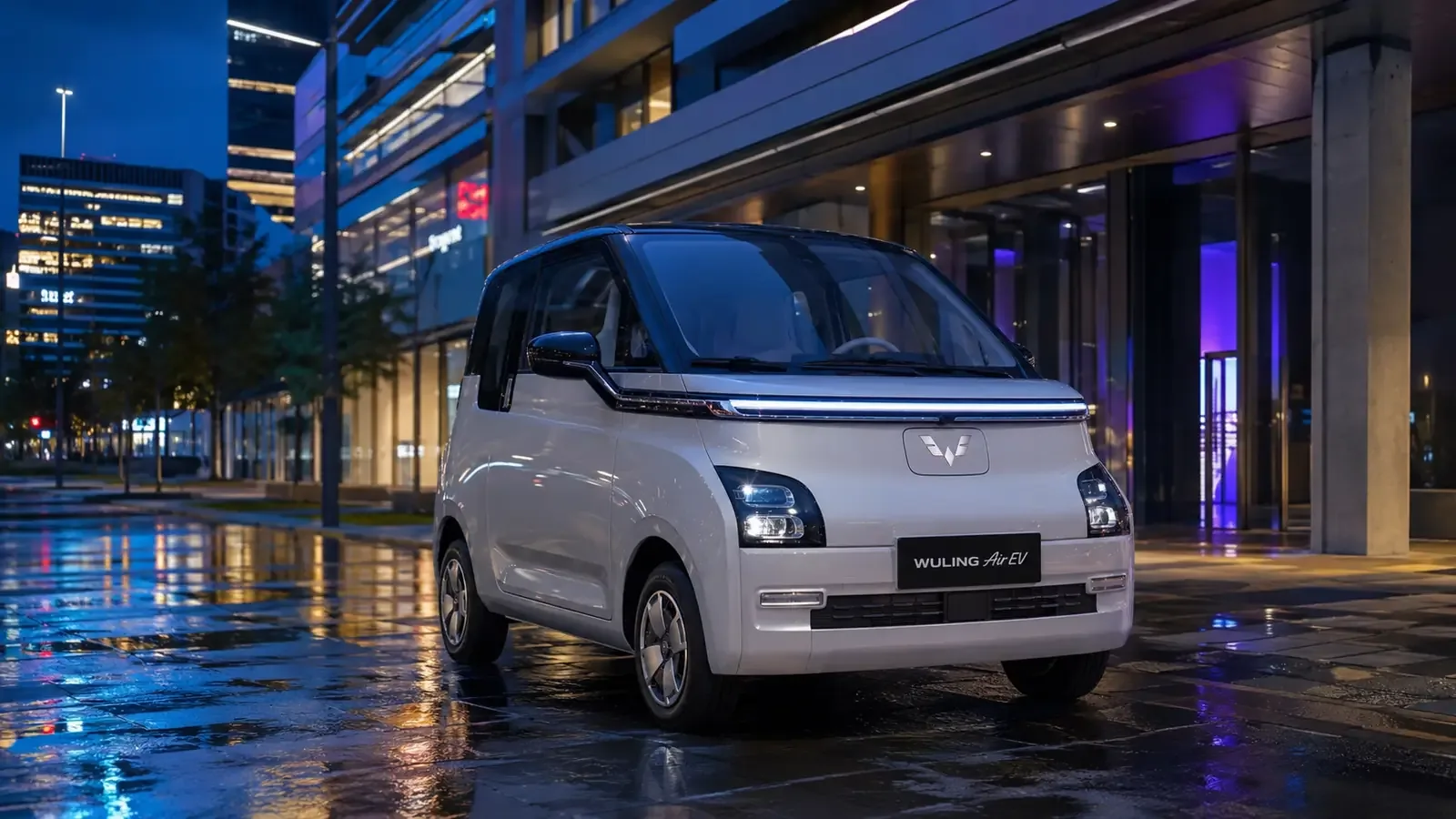
The Wuling Air EV is a compact city EV, but Germany still lacks an official retail channel.
Is the Wuling Air EV available in Germany?
At the time of writing, the Wuling Air EV does not have a normal German dealer network or a German official price list. That matters more than the headline overseas price, because a cheap city EV can become much less cheap once it has to pass through import duties, EU rules, German registration requirements and possible technical modifications.
The car itself is real and internationally sold. Wuling’s parent joint venture, SAIC-GM-Wuling, presented the Air EV as its first EV model sold outside China, initially for Indonesia, and the model was linked to the 2022 G20 Summit in Bali. In Indonesia, Wuling now lists the New Air ev in several versions, including 200 km and 300 km variants.
For a German buyer, the main question is not “Is the Wuling Air EV cheap overseas?” It is: Can it be registered, insured, serviced and used sensibly in Germany? That answer depends on documentation, customs origin, EU conformity paperwork and whether the vehicle has the equipment required for German road use.
Wuling Air EV price: what German buyers should expect
The official Indonesian prices are useful as a baseline, but they are not German transaction prices. Wuling lists the latest New Air ev from Rp214 million for the Lite 200 km, Rp251 million for the Lite 300 km and Rp307 million for the Pro 300 km. At the ECB reference rate used in the source article, those figures convert to about €10,500, €12,300 and €15,000 respectively.
That is attractive on paper. In Germany, however, a private or commercial importer would need to consider shipping, insurance, customs valuation, VAT, inspection, registration, possible modifications and aftersales risk.
The EU has also imposed countervailing duties on China-origin battery electric vehicles. The European Commission lists a 35.3% countervailing duty for SAIC Group, in addition to other normal import costs, for China-origin BEVs covered by the measure. Since Wuling is part of the SAIC-GM-Wuling joint venture, buyers must verify the exact customs origin and applicable duty treatment before assuming a landed price. If a car is supplied from a non-China production route, the duty position may differ, but that needs proper customs documentation, not a seller’s informal claim.
Here is a practical way to look at the price:
| Version | Official overseas reference price | Battery / range | Approx. EUR equivalent | Germany buyer note |
|---|---|---|---|---|
| Wuling Air EV Lite 200 km | Rp214 million | 17.3 kWh LFP / up to 200 km | About €10,500 | Cheapest reference point, but German landed cost can rise sharply after import costs and approval work. |
| Wuling Air EV Lite 300 km | Rp251 million | 26.7 kWh LFP / up to 300 km | About €12,300 | The better range choice for European city use, though still not a motorway-focused EV. |
| Wuling Air EV Pro 300 km | Rp307 million | 26.7 kWh LFP / up to 300 km | About €15,000 | Best equipment level, but likely too expensive after full German compliance costs unless imported in volume. |
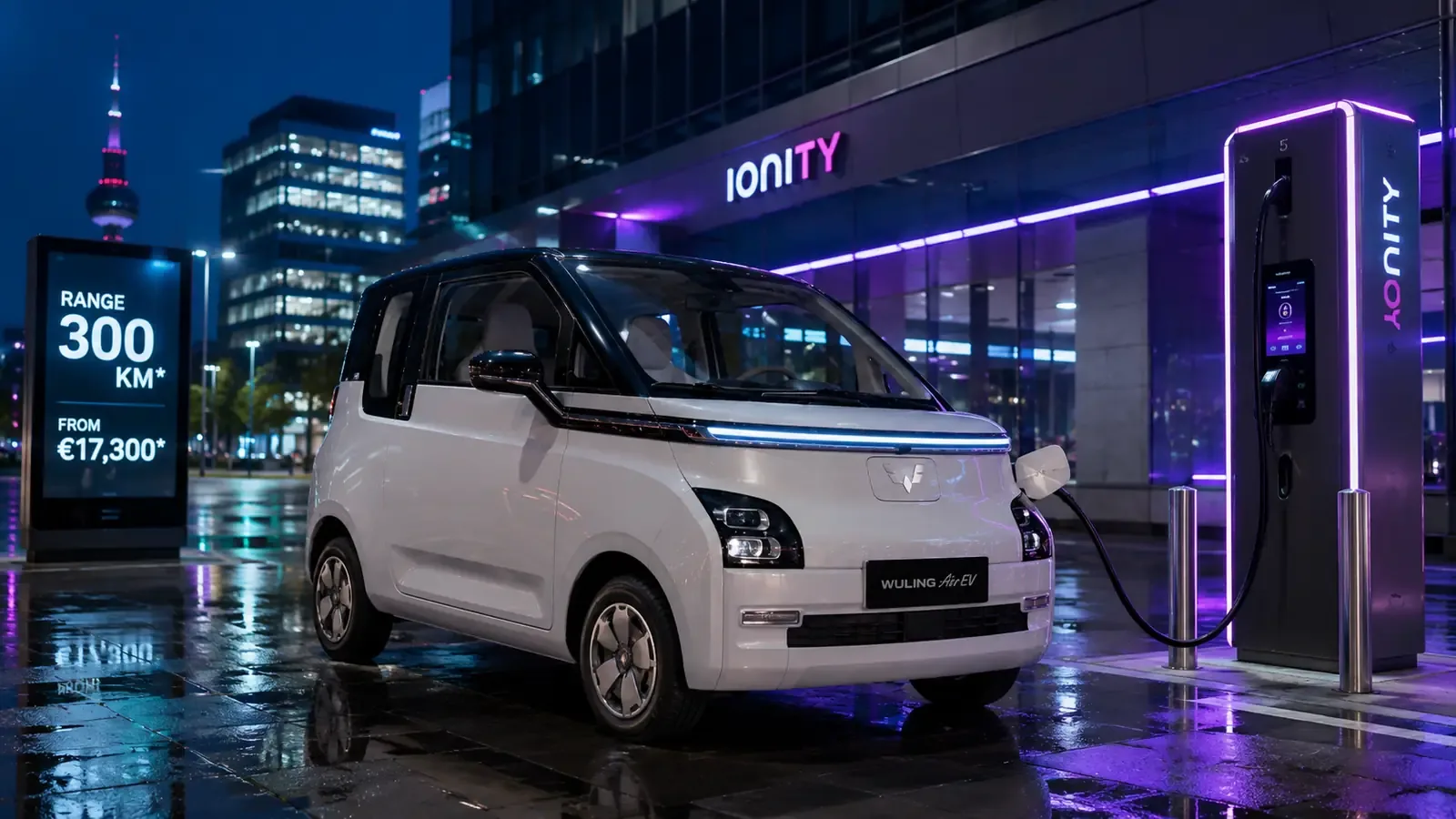
The 300 km version is the more practical choice for European urban use.
A rough German landed-cost scenario can easily move the car beyond its “cheap EV” image. For example, a €15,000 Pro 300 km car could become much more expensive after freight, 10% normal car import duty, possible China-origin BEV countervailing duty, 19% German import VAT and inspection costs. Germany commonly applies 10% import duty and 19% import VAT to cars imported from outside the EU, while the EU BEV countervailing measure adds another layer for covered China-origin electric vehicles.
Wuling Air EV range: 200 km or 300 km?
The Wuling Air EV range is simple to understand: the smaller battery version is rated at up to 200 km, while the larger battery versions are rated at up to 300 km. The battery chemistry is LFP, which is a sensible choice for a small city car because it is generally valued for durability and cost control. Wuling lists both battery packs with an IP67 rating.
The important point for Germany is that “up to 300 km” should not be read like a WLTP figure for a European-market car unless the importer provides a valid WLTP number. In real German use, range will depend heavily on temperature, speed and heating demand. In summer city driving, a careful driver may get close to the car’s intended urban efficiency. In winter, with cabin heating and colder battery temperatures, the useful range will be lower. On the Autobahn, the car’s small battery and low-power motor make it the wrong tool for repeated long-distance trips.
For most German buyers, the 300 km version is the only one that makes sense. A 200 km city EV can work for short commutes, but Germany’s mix of ring roads, fast B-roads and occasional motorway use makes extra battery capacity valuable. The so-called Wuling Air EV Long Range is therefore the version to watch, even though Wuling’s latest Indonesian naming now uses 300 km Lite and 300 km Pro descriptions rather than simply “Long Range.”
What is the Wuling Air EV like inside?
The Wuling Air EV interior is more modern than its size suggests. The car is only 2,974 mm long, 1,505 mm wide and 1,631 mm tall, with a 2,010 mm wheelbase, yet Wuling lists it as a four-seater. That does not make it a family hatchback. It means it can carry two adults comfortably and occasionally carry rear passengers for short trips.
The Pro version is the one that gives the Air EV its more premium image. Wuling lists a 10.25-inch TFT cluster, a 10.25-inch integrated floating wide screen, synthetic leather seats, leather-covered steering wheel, rear parking sensor and camera, keyless entry and Internet of Vehicle features on the Pro 300 km. Lower versions are much simpler, with smaller display equipment and fewer convenience features.
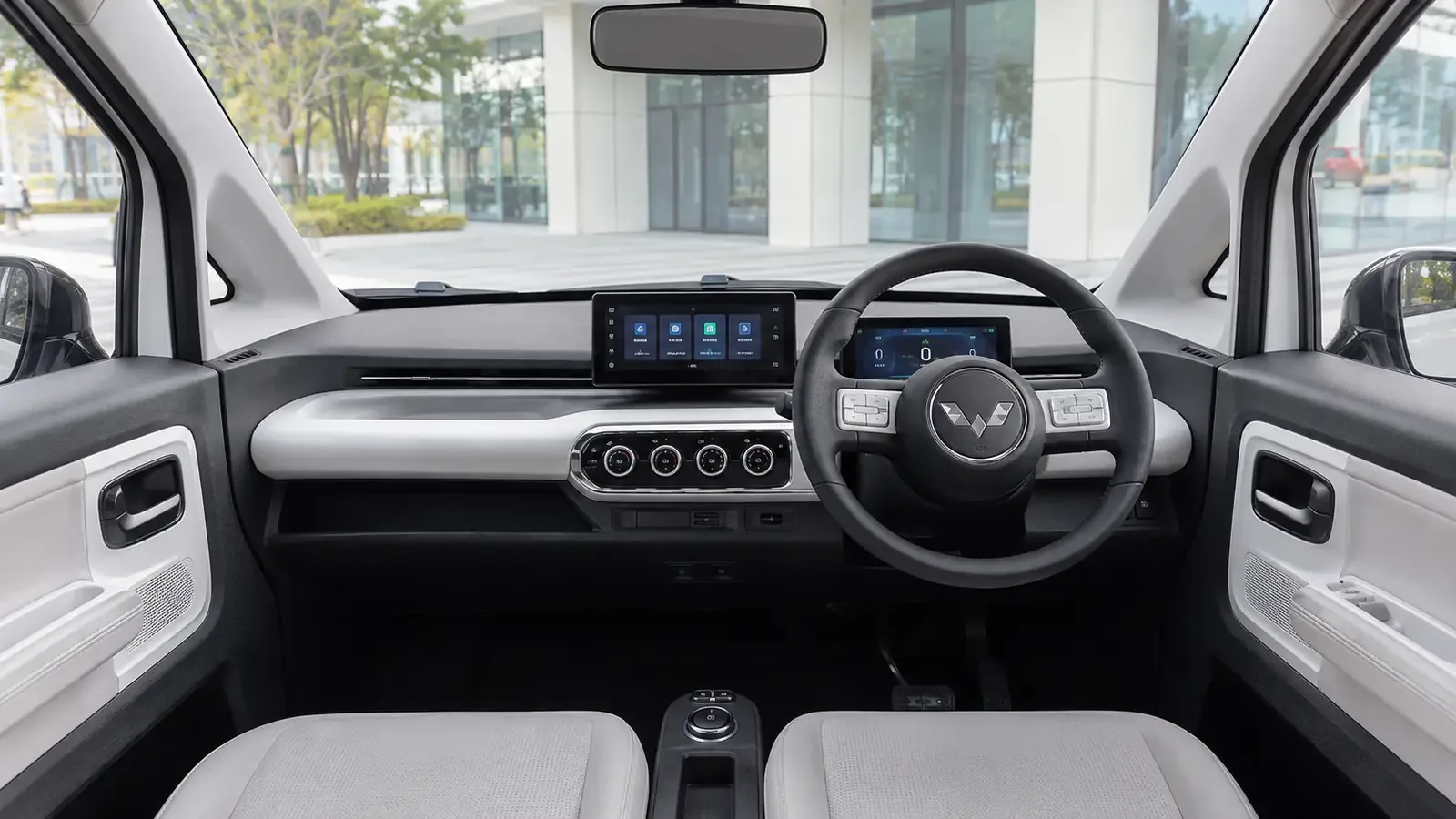
The Air EV interior is small, simple and more modern than its price might suggest.
For German users, the interior strengths are easy parking, low-speed visibility and a cheerful cabin design. The weaknesses are just as clear: limited luggage room, narrow body, small wheels and likely less sound insulation than mainstream European EVs. If your comparison is a Dacia Spring, Fiat 500e, used Renault Twingo Electric or Smart EQ, the Wuling feels like a very compact urban pod rather than a conventional small car.
Driving position and performance
The Air EV uses a 30 kW permanent magnet synchronous motor with 110 Nm of torque and a single-speed reduction gearbox. That is enough for urban traffic, parking garages and short suburban routes. It is not enough to make the car feel relaxed at sustained high speed.
Germany is a tough market for micro EVs because even small cars are expected to handle fast roads confidently. The Wuling Air EV’s mission is different. It was designed for dense cities, short trips and buyers who prioritise low running costs over performance. In that role, it makes sense. As an only car for a German household, it is harder to recommend.
The best use case would be commuting inside Munich, Berlin, Hamburg, Cologne or Frankfurt; short delivery or campus mobility; second-car duties for a family; local business use; or a small fleet vehicle where charging happens at base.
Registration, TÜV and German approval risk
This is the part many buyers underestimate. A car can be cheap overseas and still difficult to register in Germany.
German registration normally becomes much easier when a vehicle has EU type approval and a Certificate of Conformity. For imported new vehicles, local German authorities can require the original EEC Certificate of Conformity for identification and registration. For vehicles without normal EU approval, special approval or individual approval routes may be needed; Germany’s Federal Motor Transport Authority notes that exemption permits can allow first registration in Germany under specific conditions.
That means a German buyer should ask an exporter for more than photos and a FOB price. The key documents are type approval status, battery safety documentation, charging compatibility, lighting compliance, VIN documentation, customs origin, invoice, packing list, bill of lading and any test data needed for TÜV or Einzelabnahme.
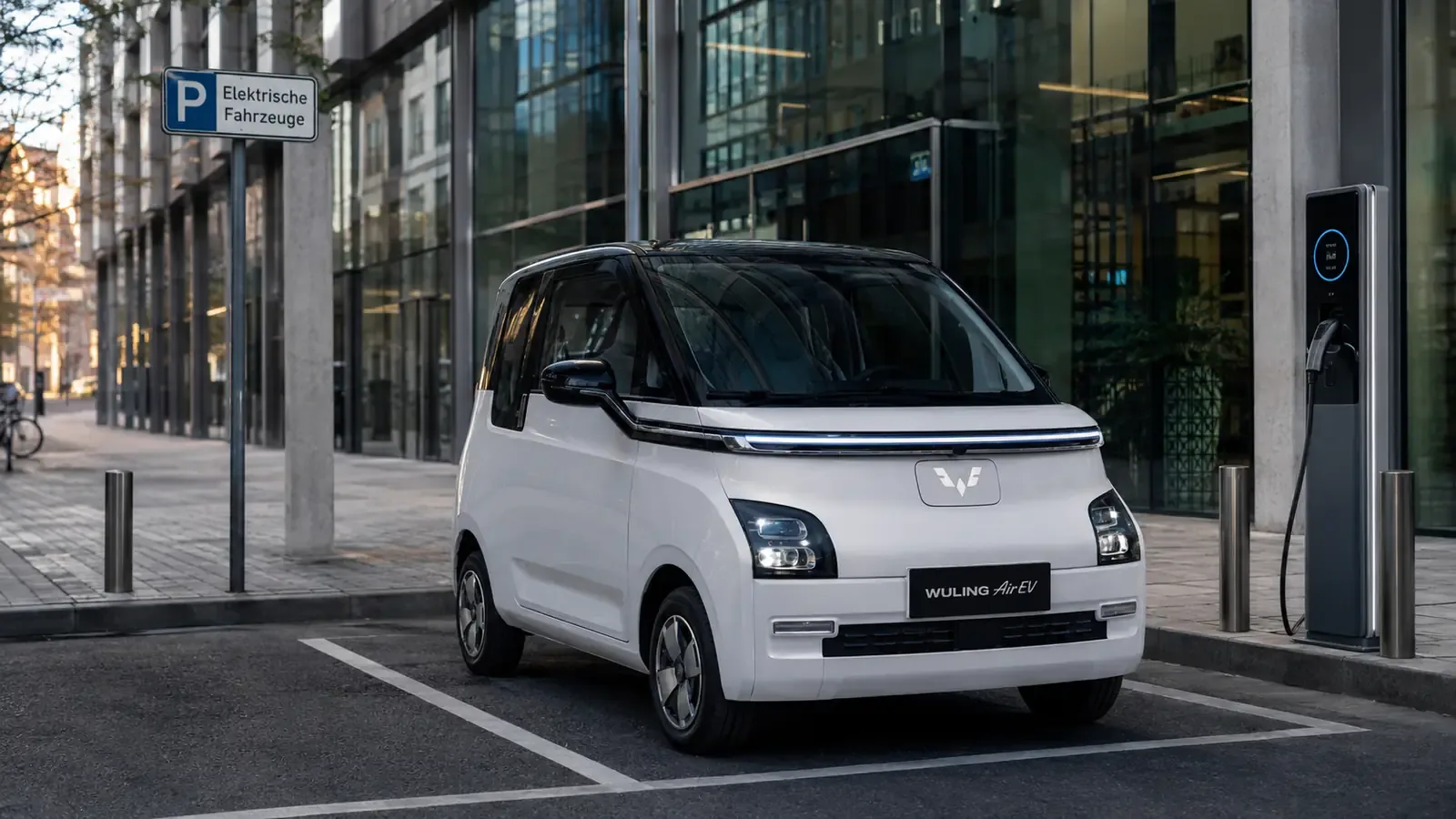
For Germany, registration certainty matters as much as the overseas sticker price.
For private buyers, this process can be frustrating and expensive. For importers buying multiple units, it may be possible to spread compliance costs across several cars, but only if the vehicle can actually be made compliant.
How does it compare with small EVs in Germany?
The Wuling Air EV is interesting because Germany still lacks many truly cheap electric cars. European microcars such as the Citroën Ami and Microlino target urban mobility, while entry-level EVs such as the Dacia Spring offer a more conventional car format. The Dacia Spring has been listed in Germany at around the high-teens in euros in some databases and has also been promoted with major discounts, showing how aggressive the low-cost EV segment has become.
The Wuling’s theoretical advantage is price. Its weakness is European readiness. A German-approved Dacia Spring may cost more than the overseas Wuling price, but it comes with a clearer warranty, dealer support, EU documentation and normal registration. That is worth real money.
Online discussion around Chinese mini EVs often circles back to the same point: people like the idea of a cheap, simple electric car, but they worry about safety standards, legal use and whether a China-market price can survive Western regulation. Western markets create very different expectations for safety, speed and compliance.
Pros and cons
Pros
The Wuling Air EV has a genuinely compact footprint, making it easy to park and easy to drive in dense cities. The 300 km version gives it more useful urban range than many quadricycle-style microcars. The Pro interior looks modern, with a digital cockpit, connected features and a cabin that feels more designed than basic.
The LFP battery is also a positive for buyers who care about cost and long-term urban use. For exporters and fleet buyers, the car’s simple format could be attractive in markets where low-speed urban mobility is more important than highway performance.
Cons
Germany is not the natural home for this car yet. There is no clear official German retail channel, no simple German list price and no guarantee that an individually imported car will be easy to register. The car’s low power output also limits its appeal outside city use.
The biggest issue is price realism. Once freight, duties, VAT, approval work and importer margin are added, the Wuling Air EV may no longer be cheaper than an EU-ready small EV. For German private buyers, that can turn a clever budget car into a risky import project.
Should German buyers consider the Wuling Air EV?
For most private buyers in Germany, the Wuling Air EV is more interesting as a sign of where affordable EVs are heading than as an easy purchase today. It shows that Chinese manufacturers can build a small, useful electric city car with enough range for daily urban life and a price that looks very attractive in Asia.
But Germany is a demanding market. A car needs more than a low sticker price. It needs registration certainty, safety documentation, service support, parts supply, insurance access and charging compatibility. Until Wuling or a serious European distributor offers the Air EV with proper German or EU-market approval, most buyers should treat it as an import curiosity rather than a straightforward alternative to a Dacia Spring, Fiat 500e, Smart EQ or used Renault Zoe.
For dealers, exporters and fleet buyers, the story is different. If you can solve homologation, documentation and aftersales, the Wuling Air EV could fit a niche: low-cost urban EV fleets, resorts, campuses, local delivery, car-sharing and city mobility projects. But the business case must be built on landed cost, not Indonesian retail price.
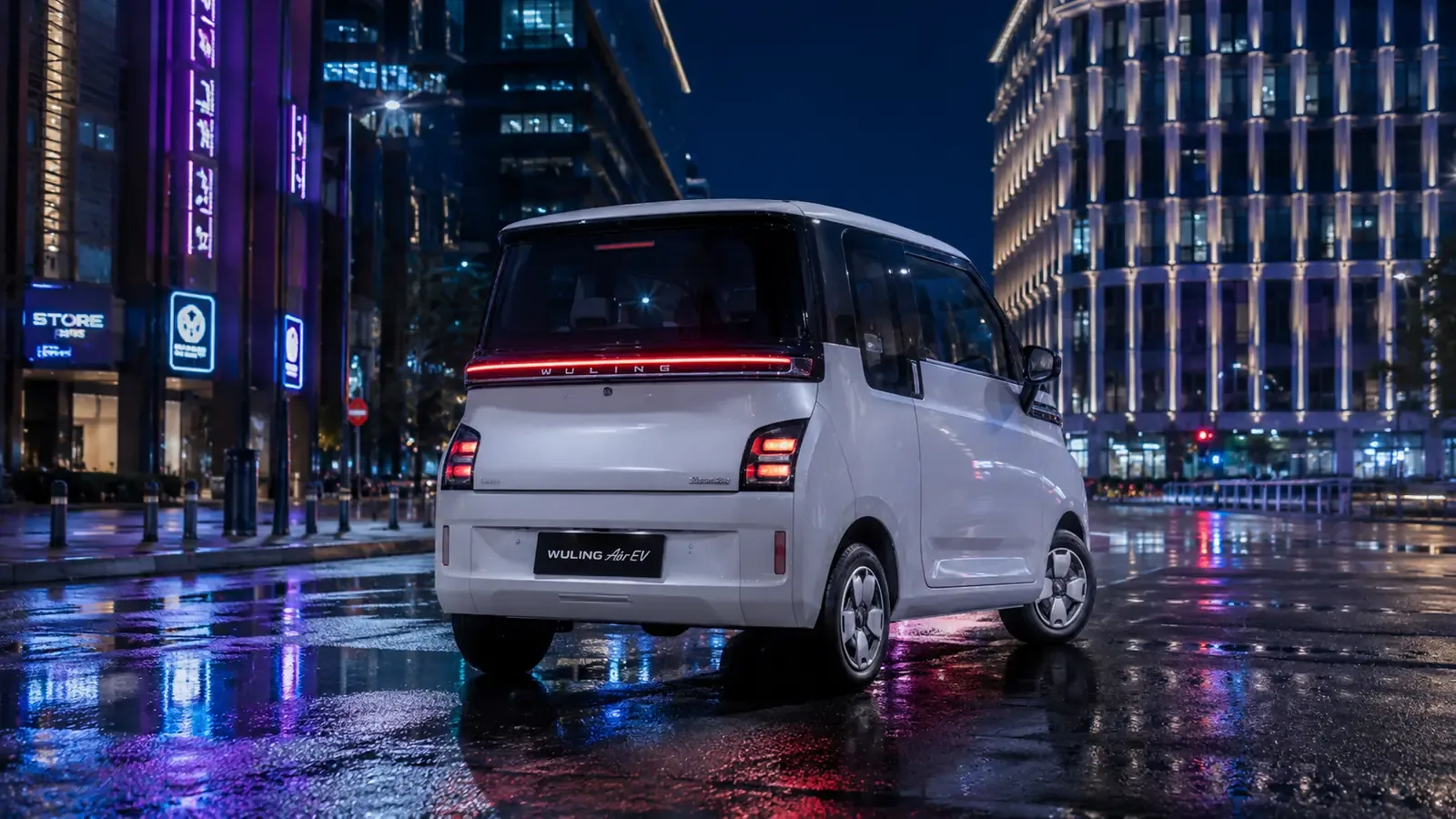
The Air EV makes most sense as a city-first electric runabout, not a motorway car.
FAQ
Is the Wuling Air EV sold in Germany?
Not through a normal official German retail channel with a published German list price. German buyers would currently need to look at import routes, which brings registration, TÜV, customs and warranty questions.
What is the Wuling Air EV price in Germany?
There is no official German price. Overseas reference pricing in Indonesia is about €10,500 to €15,000 before import costs, based on official Wuling Indonesia prices and the ECB IDR/EUR reference rate cited in the source article.
What is the Wuling Air EV Long Range?
The phrase usually refers to the larger-battery Air EV versions with up to 300 km of official range. Wuling’s latest Indonesian lineup describes these as 300 km versions, including Lite 300 km and Pro 300 km.
Is the Wuling Air EV good for Autobahn driving?
It is not ideal. With a 30 kW motor and a city-car layout, the Air EV is better suited to urban and suburban use than sustained high-speed motorway driving.
How many seats does the Wuling Air EV have?
Wuling lists the Indonesian New Air ev as a four-seat vehicle. In practice, it is best seen as a two-adult city car with rear seats for short trips.
Can I import a Wuling Air EV to Germany?
Possibly, but registration is the difficult part. You need to verify EU type approval or individual approval requirements, customs origin, tax exposure, technical compliance and TÜV acceptance before buying.
Is the Wuling Air EV cheaper than a Dacia Spring?
Overseas, yes, the reference price is lower. In Germany, not necessarily. Once import duties, VAT, possible EU countervailing duties, shipping and approval costs are included, the price advantage can shrink or disappear.
Source References
- Wuling Indonesia New Air ev official page
- Wuling Indonesia Air EV specifications
- GM China / SAIC-GM-Wuling Air EV international launch note
- European Commission BEV countervailing duties on China-origin BEVs
- ECB EUR/IDR reference exchange rates
- HowToGermany vehicle import overview
- Wiesbaden imported vehicle registration information
- KBA special approvals information
- EV Database Dacia Spring reference
- WIRED Wuling Hongguang Mini EV review background