Direct answer: The Wuling Air EV is not officially sold in the United States, so there is no official U.S. MSRP. In overseas markets such as Indonesia, the current Wuling New Air ev uses LFP battery packs of 17.3 kWh or 26.7 kWh, depending on the version. The official Jakarta price starts from Rp214 million for the Lite Standard Range, Rp251 million for the Lite Long Range, and Rp307 million for the Pro Long Range, roughly equal to about $11,850–$17,000 before shipping, import costs, U.S. compliance work, duties, and dealer margin. Wuling’s Indonesian specification sheet lists the 17.3 kWh version with up to 200 km of range and the 26.7 kWh versions with up to 300 km of range. Source: Wuling Indonesia official Air ev page.
For American buyers, the important point is simple: the Wuling Air EV is an interesting Chinese micro EV to study, but it is not a normal U.S. retail purchase. A private import would face safety certification, EPA/import paperwork, tariffs, and aftersales questions that make the “cheap Chinese EV” headline price very different from a realistic U.S. road-legal cost. NHTSA states that non-U.S.-certified vehicles generally must be determined eligible and imported through a Registered Importer unless they qualify under specific exemptions such as the 25-year rule.
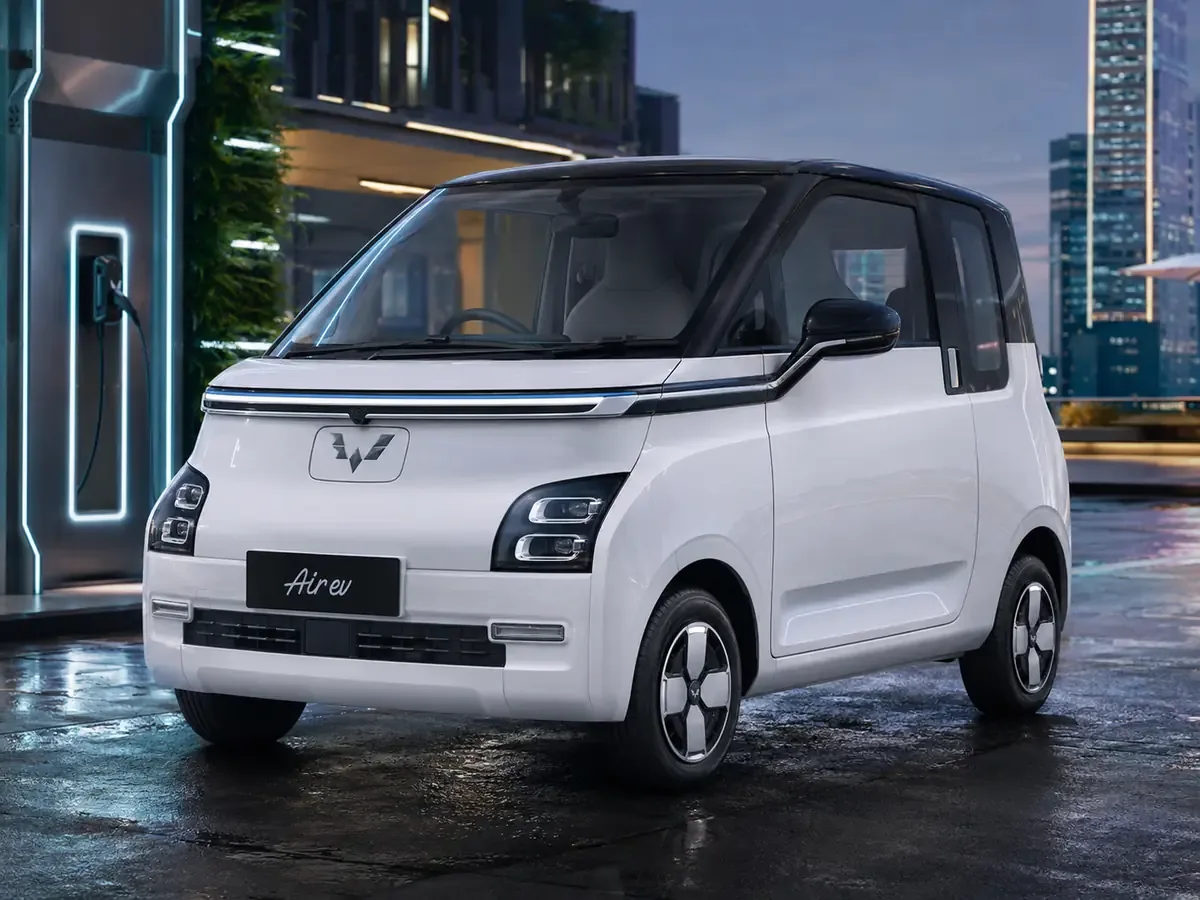
(Article opening image: Wuling Air EV front three-quarter view in a futuristic urban EV setting. File: images/wuling-air-ev-battery-capacity-price-01-front-city.webp)
What Is the Wuling Air EV?
The Wuling Air EV is a tiny four-seat battery-electric city car from SAIC-GM-Wuling, better known globally for making highly affordable small EVs. General Motors China described the Air EV as a strategic model for SGMW’s new-energy-vehicle globalization, noting that it first launched in Indonesia and was used as an official car partner for the 2022 G20 Summit in Indonesia.
It is not designed like a Chevrolet Bolt, Nissan Leaf, Tesla Model 3, or any mainstream U.S.-market EV. It is shorter than many American subcompact hatchbacks, uses narrow 12-inch tires, seats four, and is built mainly for dense city use. Wuling’s official Indonesian data lists the car at 2,974 mm long, 1,505 mm wide, 1,631 mm tall, with a 2,010 mm wheelbase and four-seat layout.
That makes the Wuling Air EV closer in spirit to a kei-style urban commuter than a conventional American small car. For overseas consumers and vehicle importers, the appeal is obvious: low purchase price, simple LFP battery chemistry, compact dimensions, and basic daily usability. For U.S. buyers, however, the problem is equally obvious: America’s vehicle-safety, software, tariff, and import rules were not built around ultra-cheap Chinese city EVs.
Wuling Air EV Battery Capacity: 17.3 kWh or 26.7 kWh
The most searched question around this car is battery size. The answer depends on the version.
| Variant | Battery Capacity | Battery Type | Claimed Range | Motor Output | Best Use Case |
|---|---|---|---|---|---|
| New Air ev Lite 200 km / Standard Range | 17.3 kWh | Lithium Ferro-Phosphate, IP67 rated | Up to 200 km | 30 kW / 110 Nm | Short city commutes, campus use, local delivery, urban errands |
| New Air ev Lite 300 km / Long Range | 26.7 kWh | Lithium Ferro-Phosphate, IP67 rated | Up to 300 km | 30 kW / 110 Nm | Longer urban use, fewer charging stops, fleet operation |
| New Air ev Pro 300 km / Long Range | 26.7 kWh | Lithium Ferro-Phosphate, IP67 rated | Up to 300 km | 30 kW / 110 Nm | Buyers wanting the better-equipped interior and safety package |
Wuling’s official Indonesian page lists the Air EV battery as Lithium Ferro-Phosphate with IP67 rating, which is useful for tropical markets where rain and standing water are common. The 17.3 kWh version is tied to the 200 km version, while the 26.7 kWh pack is used for the 300 km variants.
For a U.S. reader, the important context is that these range numbers are not EPA ratings. They should not be compared directly with U.S.-market EVs that use EPA-cycle estimates. In real American driving, especially at higher speeds, with air conditioning, cold weather, hills, or freeway use, a small 17.3–26.7 kWh battery would deliver much less range than the headline figure suggests. The Air EV is a city car first, not an interstate commuter.
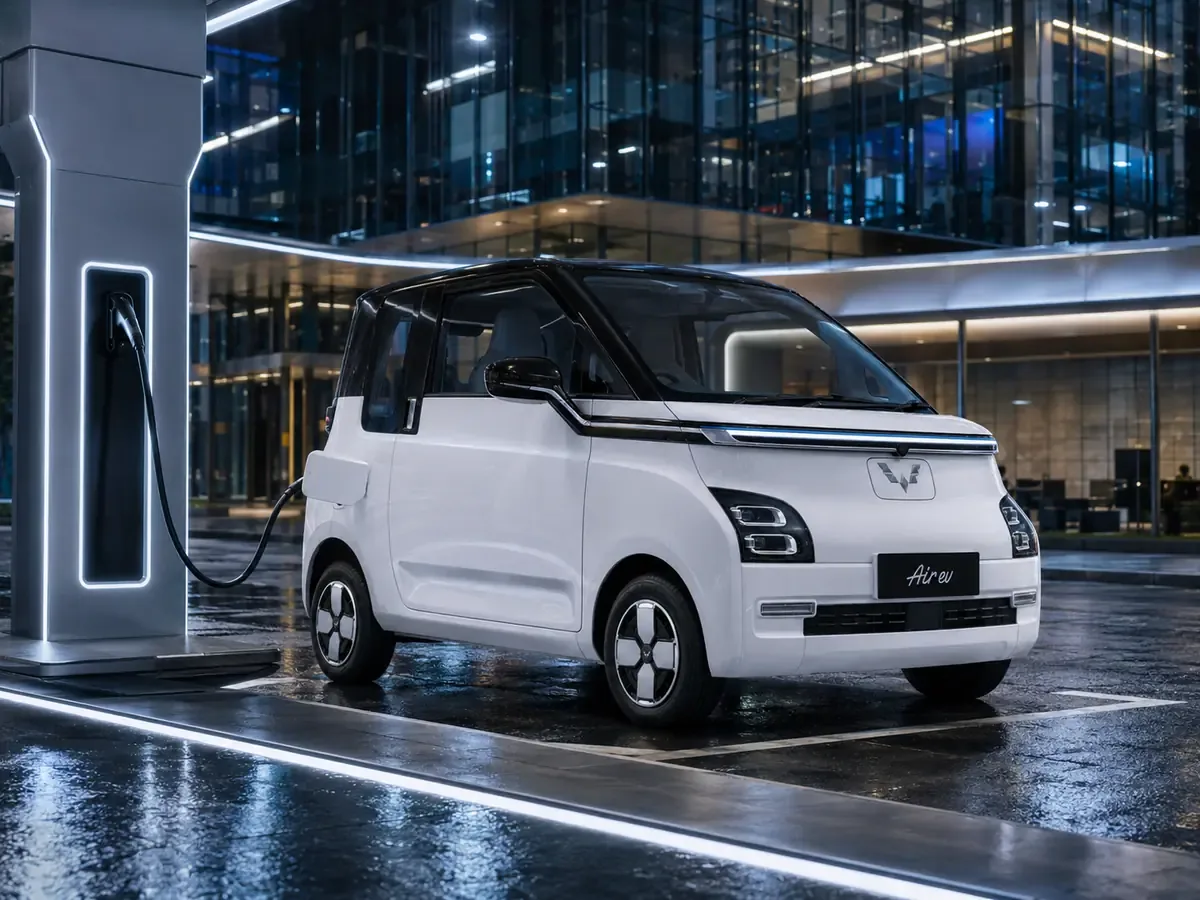
(Mid-article image: Wuling Air EV at a modern EV charging station, suitable for battery-capacity section. File: images/wuling-air-ev-battery-capacity-price-03-charging-station.webp)
How Much Would the Wuling Air EV Cost in the U.S.?
There is no official Wuling Air EV price in the U.S. because Wuling does not sell the Air EV through a normal American dealer network. The best reference is overseas pricing. Wuling Indonesia lists these official Jakarta starting prices, valid from January 1, 2026:
| Variant | Official Indonesia Price | Approx. USD Equivalent | What It Means for U.S. Buyers |
|---|---|---|---|
| New Air ev Lite Standard Range | Rp214 million | About $11,850 | This is an overseas MSRP, not a U.S. landed price. |
| New Air ev Lite Long Range | Rp251 million | About $13,900 | Better battery value, but still not U.S.-certified. |
| New Air ev Pro Long Range | Rp307 million | About $17,000 | Most desirable spec, but import economics become difficult. |
The USD estimates above are editorial conversions, not sales quotes. Exchange rates move, and the real landed price for an American buyer would depend on shipping, port fees, customs brokerage, compliance work, tariffs, registration issues, and aftersales support.
In theory, a $12,000–$17,000 electric city car sounds exactly like what many U.S. shoppers say they want: small, simple, cheap, and efficient. In practice, that number is not what an American buyer would pay. Shipping, port fees, customs brokerage, compliance work, tariffs, registration issues, and aftersales support can quickly destroy the price advantage.
The U.S. increased Section 301 duties on Chinese electric vehicles to 100% in 2024, according to the U.S. Trade Representative’s final tariff action. That is one reason why Chinese EVs that look extremely cheap overseas do not arrive in U.S. showrooms at similar prices.
Is the Wuling Air EV Road-Legal in the United States?
For normal U.S. buyers, assume the answer is no, not as a regular new passenger car.
NHTSA says a vehicle not originally built to comply with all applicable Federal Motor Vehicle Safety Standards must first be determined eligible for importation and generally brought in through a Registered Importer, unless it qualifies for a specific exemption. The well-known age-based exemption applies to vehicles at least 25 years old, and the Wuling Air EV is far too new for that route.
There are also EPA import requirements for vehicles and engines. EPA explains that nonconforming vehicles can be imported only under certain circumstances, such as being modified, tested, and certified by an Independent Commercial Importer.
Could someone bring one in for research, display, off-road use, or low-speed-vehicle conversion? Possibly in narrow cases, but that is not the same as buying a normal car for everyday public-road use. A U.S. buyer should not treat the Wuling Air EV like a gray-market used Japanese sports car or a plug-and-play neighborhood EV.
Why Americans Are Interested in the Wuling Air EV
The interest is easy to understand. The U.S. market has many large EVs, premium EVs, and high-performance EVs, but very few genuinely cheap urban electric cars. The Wuling Air EV shows a different design philosophy: reduce size, reduce battery capacity, simplify the vehicle, and keep the purchase price low.
Wired previously tested the related Wuling Hongguang Mini EV and framed it as a very affordable Chinese EV that highlights how different China’s small-EV market is from the U.S. market. Reuters also reported in 2026 that Chinese consumers can choose from many battery-electric or hybrid models under $25,000, while the average new car in the U.S. was above $51,000 in March 2026.
That price gap is why cars like the Wuling Air EV keep appearing in U.S. EV discussions, YouTube videos, Reddit threads, and import conversations. One Reddit owner review of a Wuling Air EV Long Range described it as a basic commuter with a 26.7 kWh LFP battery, 30 kW rear motor, and 300 km claimed range, which lines up closely with Wuling’s official Indonesian specification.
But the Air EV is not a magic answer to America’s affordable-EV problem. It is a tiny urban runabout made for markets where daily driving speeds, parking conditions, pricing expectations, and regulatory requirements are different.
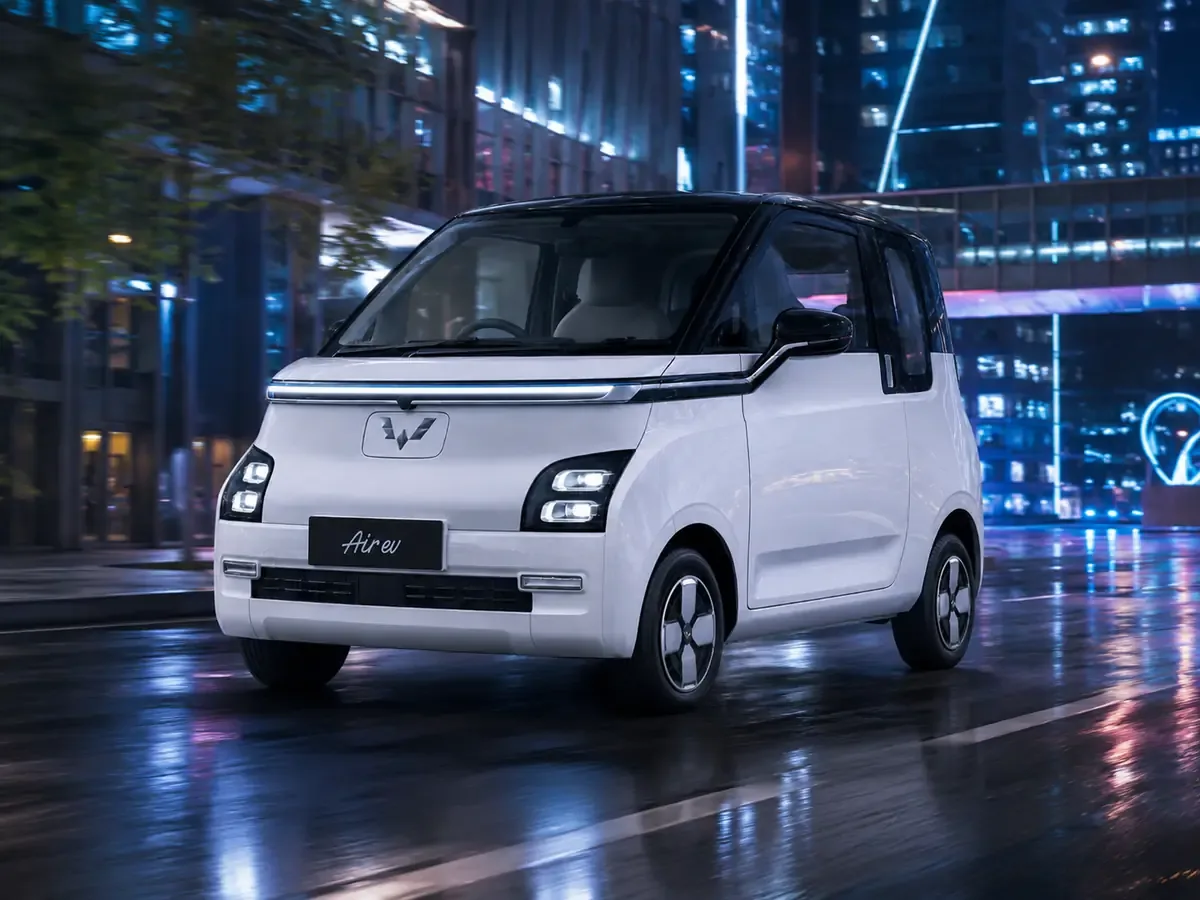
(Driving-scene image: Wuling Air EV in a futuristic city street, suitable for U.S. buyer-interest section. File: images/wuling-air-ev-battery-capacity-price-02-driving-city.webp)
Wuling Air EV Interior: Simple, Tall, and Surprisingly Modern
The Wuling Air EV interior is one of the reasons the car gets attention. It does not look like a bare-bones golf cart. In higher versions, Wuling lists a 10.25-inch integrated floating wide screen, synthetic leather seats, leather-covered steering wheel, smart start, keyless entry, internet-of-vehicle features, and Wuling Indonesian Voice Command. Lower versions are much simpler, using a 7-inch TFT cluster and fewer convenience features.
This difference matters. If an importer or overseas buyer is comparing versions, the Pro 300 km is not just a bigger-battery car; it is the version that makes the Air EV feel more like a modern microcar rather than a basic fleet vehicle.
Still, American expectations need to be realistic. The car is less than three meters long. Rear-seat space is usable only within the limits of a very small city EV. Cargo room is limited when all four seats are in use. The upright body helps headroom, but width and crash structure are not comparable with larger U.S.-market EVs.
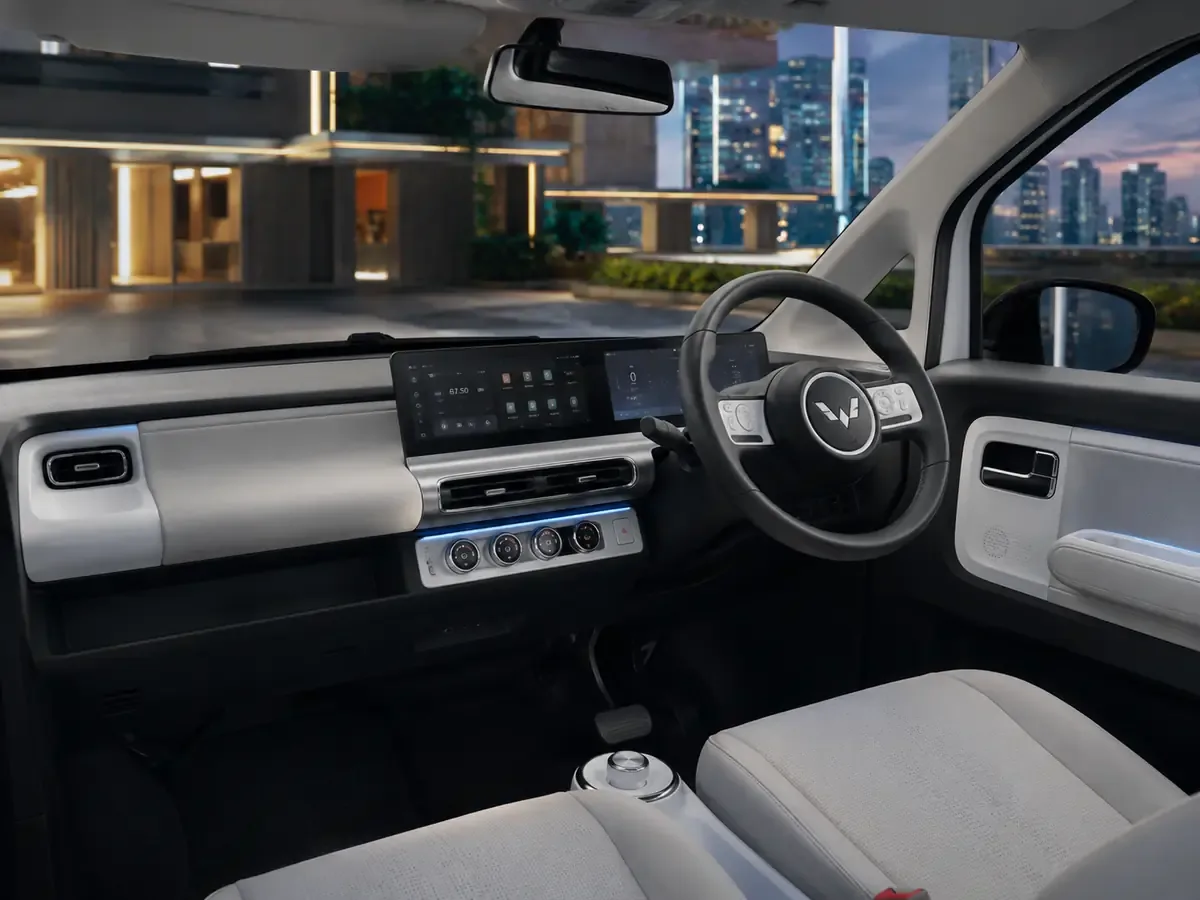
(Interior image: Wuling Air EV compact cabin and digital dashboard, suitable for interior section. File: images/wuling-air-ev-battery-capacity-price-05-interior.webp)
Battery Capacity vs. Real-World Use
The Wuling Air EV’s 17.3 kWh and 26.7 kWh battery options make sense because this vehicle is light, narrow, and low-powered. A 30 kW motor is enough for urban acceleration, but it is not intended for fast freeway merging, long-distance travel, or sustained high-speed driving. Wuling’s official specification lists the same 30 kW and 110 Nm motor output across the Indonesian New Air ev lineup.
For city driving, the smaller battery can be enough. A short commute, school run, local delivery route, or downtown errand loop does not require a 60–80 kWh pack. In fact, using a smaller LFP pack is one reason the car can be so affordable.
The Long Range version is the safer pick for most private buyers because the extra battery capacity gives more flexibility. The Pro 300 km adds the more complete equipment package, including two airbags, ESC, hill-hold control, rear parking sensor and camera, and the larger screen setup.
Pros and Cons for U.S. Buyers and Importers
| Pros | Cons |
|---|---|
| Very low overseas starting price compared with most U.S.-market EVs | No official U.S. sales, warranty, parts network, or dealer support |
| Simple LFP battery options: 17.3 kWh and 26.7 kWh | No EPA range rating, so overseas range claims are not directly comparable |
| Compact footprint is ideal for dense urban use | Not designed for American freeway-heavy driving habits |
| Higher trims have a surprisingly modern cabin | U.S. import, FMVSS, EPA, tariff, and software rules create major barriers |
| Useful reference model for affordable EV product research | Road-legal conversion may be impractical or uneconomical |
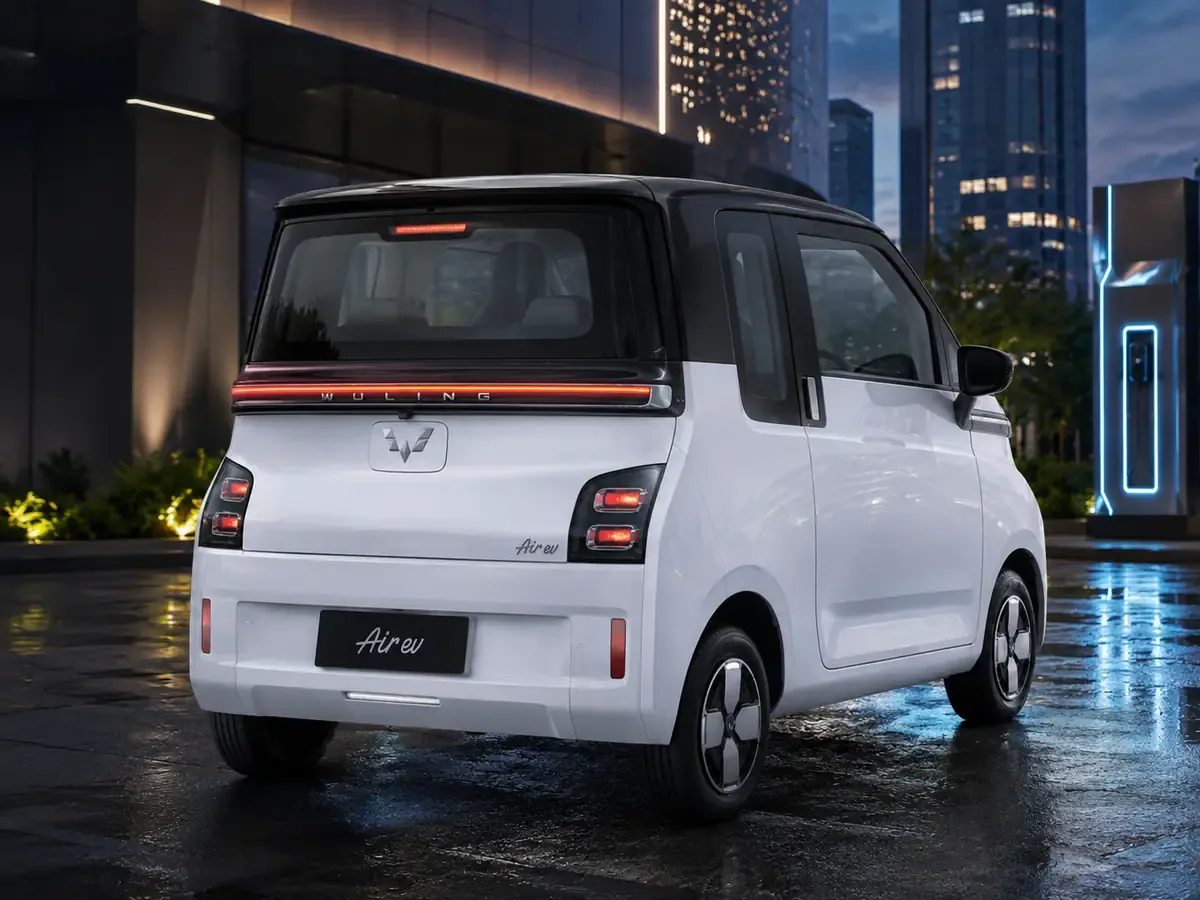
(Design image: Wuling Air EV rear three-quarter view in a modern technology district, suitable for Pros and Cons or final verdict area. File: images/wuling-air-ev-battery-capacity-price-04-rear-city.webp)
Should American Buyers Wait for the Wuling Air EV?
For normal U.S. consumers, no. The Wuling Air EV is worth following, but it is not a realistic near-term replacement for a Nissan Leaf, Chevrolet Bolt EV, Fiat 500e, used Tesla Model 3, or any road-legal U.S.-market EV.
For importers, fleet researchers, policy analysts, EV bloggers, and automotive product planners, the car is more interesting. It shows what happens when an automaker builds an EV around city mobility and low cost instead of long range and high horsepower. The lesson is not that Americans should all import Wuling Air EVs. The lesson is that smaller batteries, simpler equipment, and urban-focused design can reduce EV costs dramatically.
That lesson may matter more than the car itself.
Final Verdict
The Wuling Air EV battery capacity is 17.3 kWh for the 200 km version and 26.7 kWh for the 300 km versions. Its official Indonesian price range starts from Rp214 million to Rp307 million, or roughly $11,850–$17,000 at current exchange rates before any U.S. import costs.
For the United States, however, the headline price is mostly theoretical. The Air EV is not officially sold in America, is not EPA-rated, and should not be assumed to meet U.S. road-legal requirements. Add U.S. import rules, 100% Section 301 tariffs on Chinese EVs, and connected-vehicle restrictions, and the car becomes more of a case study than a practical purchase.
For overseas markets, the Wuling Air EV is a smart low-cost city EV. For American buyers, it is a glimpse of the affordable Chinese EV market that U.S. consumers can see online but cannot easily buy.
FAQ
What is the Wuling Air EV battery capacity?
The Wuling Air EV uses either a 17.3 kWh LFP battery or a 26.7 kWh LFP battery, depending on the variant. The 17.3 kWh version is linked to the 200 km model, while the 26.7 kWh pack is used for 300 km versions.
What is the Wuling Air EV price in the U.S.?
There is no official Wuling Air EV price in the U.S. because the model is not officially sold there. Overseas pricing in Indonesia starts from Rp214 million, equal to roughly $11,850 before import-related costs.
Is the Wuling Air EV available in America?
No, not through normal official retail channels. Any private import would need to deal with U.S. safety, EPA, customs, tariff, and registration requirements.
Is the Wuling Air EV a good car?
It can be a good car for dense city use in markets where it is officially sold. It is small, affordable, and efficient. But it is not a good fit for most American buyers because it lacks official U.S. sales, service, certification, and freeway-oriented design.
What is the best Wuling Air EV version?
For most buyers in markets where it is sold, the 26.7 kWh Long Range version is the better choice. The Pro 300 km version adds the stronger equipment package, while the Lite 300 km gives the larger battery at a lower price.
Is the Wuling Air EV a 2025 model?
Many buyers search for “Wuling Air EV 2025,” but Wuling’s current Indonesian listing shows New Air ev prices valid from January 1, 2026. The model continues to be relevant for 2025/2026 buyer research because the core battery choices remain 17.3 kWh and 26.7 kWh.
Sources and Reference Notes
Wuling Indonesia official Air ev page
GM China / SGMW Wuling Air EV launch information
NHTSA vehicle importation and certification FAQs
EPA importing vehicles and engines guidance
Federal Register Section 301 tariff notice
Wired review of Wuling Hongguang Mini EV context